
Heavy rain rarely creates new roof problems. It finds the ones that are already there. A cracked tile or a dried-out flashing can sit unnoticed for months, then let in a surprising amount of water the first time a proper storm arrives. The good news is that most warning signs are visible well before the leak.
This guide shows you what to check inside and outside your home, which problems can't wait, and when it's time to call in roof repair services before the clouds roll in.
Key Takeaways
- Heavy rain exposes existing weak points such as cracked tiles, failed flashings and blocked gutters rather than creating new ones.
- Ceiling stains, damp insulation and daylight in your roof space are early signs that water is already getting in.
- You can learn most of what matters from the ground, so leave roof access, ridge pointing and valley checks to a professional.
- Repairing problems before storm season protects both your home and any future insurance claim.
Why Heavy Rain Turns Small Roof Problems Into Costly Repairs
A roof works as a system, and water only needs one weak point to get started. Heavy rain, especially when wind drives it sideways, pushes water under tiles, behind flashings and into gaps that stay dry in light drizzle. From there it follows the easiest path. A cracked tile wets the sarking, the sarking drips onto insulation, and the insulation carries moisture to the ceiling below. By the time a stain appears, the damage is often well advanced.
Sydney's spring and summer storm season, including east coast lows that bring days of steady rain, tests every roof in the city. Checking now means you find the problem on a dry day instead of through a dripping ceiling at midnight.
Warning Signs Inside Your Home That Point to a Roof Problem
Your ceilings often tell you about a roof problem before the roof does. Walk through each room and look up, paying extra attention to rooms under valleys, chimneys and skylights.
- Brown or yellow rings on the ceiling, which often grow after each rain
- Bubbling, sagging or soft plasterboard
- Peeling paint or hairline cracks along the cornices
- Dampness or rust around downlights and ceiling fans
- A musty smell or patches of mould in the corners
Stains that look old can still be active, so trace the edge with a pencil and check it again after the next rain. A sagging ceiling is more serious. Water is pooling above it and it can fall without warning, so keep the room clear and call a roofer straight away.
What to Look For in Your Roof Space After Light Rain
If you can safely reach your roof space, a torch and a few minutes can reveal a lot. Light rain is the ideal time, because small leaks show up without the chaos of a downpour. Look for daylight coming through the roof covering, which means there is a gap where water can follow.
Check the sarking, the foil membrane under the tiles or sheets, for tears, wet patches or drips. Run the torch along battens and rafters for dark water trails, and press the insulation to see if it's damp or compressed.
Condensation can look similar, but it tends to spread across large cold surfaces, while a leak leaves a trail that leads back to one spot. Stay on the ceiling joists and never step on the plasterboard.
Outside Warning Signs on Tiled Roofs
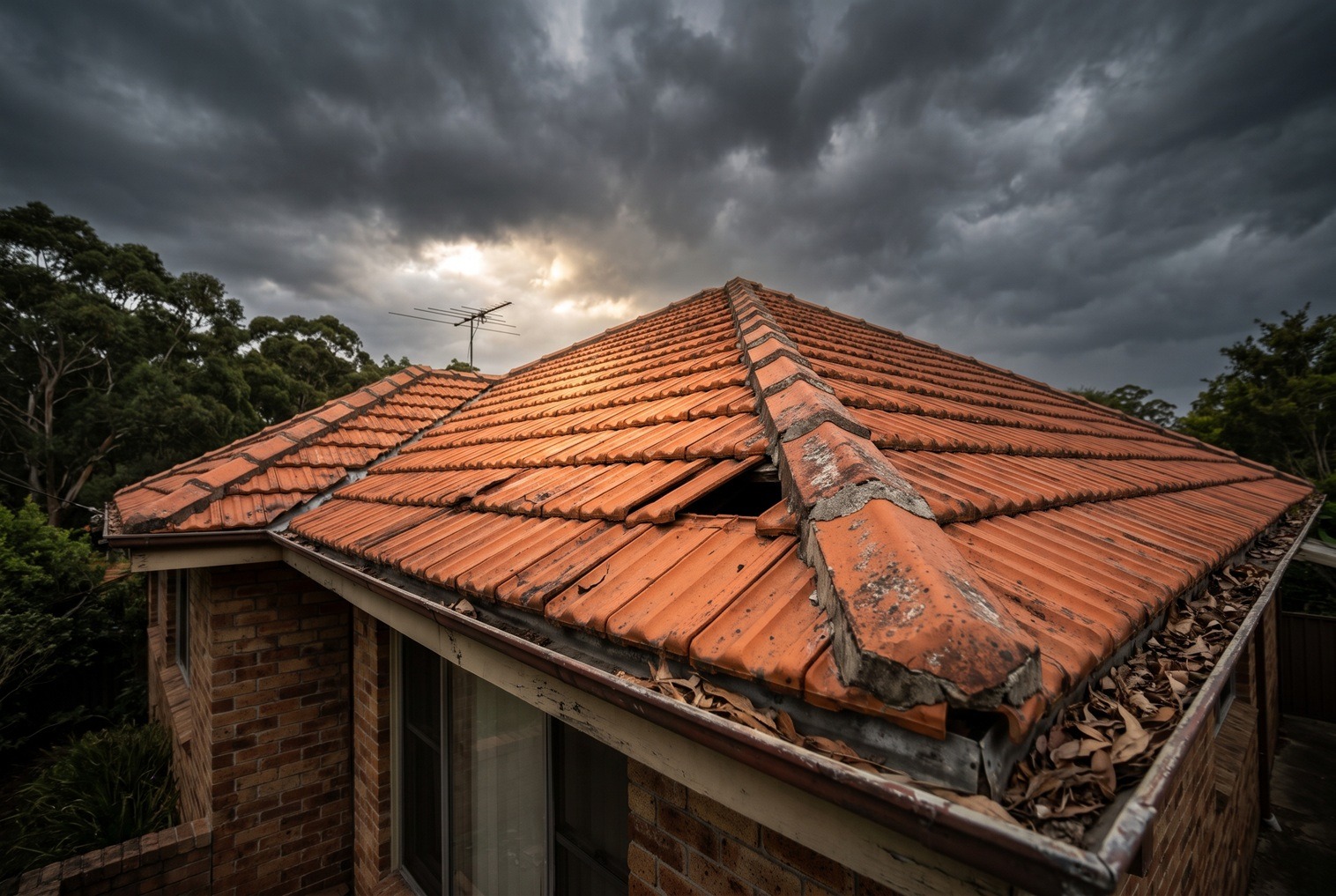
From the ground, look over your tiles for cracks, chips, slipped tiles or gaps in the pattern. Binoculars help here. Ridge capping deserves special attention because the mortar that bedding sits in breaks down over time. Crumbling or missing pointing along the ridges and hips lets rain straight into the roof space, which explains why roof repointing matters so much on older tiled homes.
Also watch for green or black patches of lichen and moss, which hold moisture against porous tiles and lift their edges over time. A handful of broken tiles is usually a small job, and professional Tile Roof Repairs Sydney costs far less than replacing a water-stained ceiling.
Outside Warning Signs on Metal and Colorbond Roofs
Metal roofs fail differently. Look for rust spots, especially around cut edges, screw heads and anywhere two different metals touch. Screws can lift or loosen as sheets expand and contract in the heat, and the rubber washers under them perish after years of sun. Check for silicone sealant that has cracked or pulled away at laps, ridges and penetrations, and for sheet edges that have lifted in strong wind.
Pooling water or dark streaks around fixings suggest moisture is already getting underneath. Small rust patches caught early can usually be treated before they turn into holes, but widespread corrosion needs a professional assessment.
Flashings, Valleys and Roof Penetrations Where Most Leaks Begin
If a roof is leaking and the tiles or sheets look fine, the flashing is usually to blame. Flashings are the thin metal strips that seal the joins between the roof and anything poking through or butting against it, such as chimneys, skylights, walls, whirlybirds, flues and solar panel mounts. Valleys, where two roof planes meet, carry the most water and tend to wear out first.
Look for lifted, rusted or gapped flashing, dried-out sealant and stains on the ceiling directly below these areas. These joins are home to several of the common types of roof damage that homeowners miss, because they're small and tucked out of sight.
Gutters and Downpipes That Can't Keep Up With a Downpour
Gutters carry away the rain your roof collects, and when they can't cope, water backs up under the roof edge and into the eaves. Check for leaf build-up, plants growing in the gutter, sagging sections, rusted joins and water marks on the fascia. After rain, look for gutters holding standing water or spilling over the front edge, which points to blockages or poor fall.
Box gutters, the concealed channels between roof sections, are easy to forget and prone to clogging with leaves, so give them their own look. Overflow that keeps soaking the fascia and rafter ends leads to rot, which turns a cheap clean into a structural repair.
How to Check Your Roof Safely Without Climbing On It
You don't need to get on the roof to learn most of what matters, and you shouldn't try. Walk around the house and study each roof face from the ground, using binoculars or the zoom on your phone. Photograph anything suspicious and note the date, so you can compare it after the next storm. If you do use a ladder, keep it at the eaves on firm, level ground and ask someone to hold it.
Never walk on tiles, because they crack underfoot and moss makes them slippery, and stay off the roof entirely in wet or windy weather. Anything that needs a closer look, like ridge pointing or valley flashings, belongs to a professional with the right safety gear.
Which Roof Problems Need Fixing Before the Rain and Which Can Wait
Not every finding is an emergency. Use this list to sort what you've found.
Fix before the rain:
- Active drips, stained ceilings or sagging plasterboard
- Cracked, missing or slipped tiles
- Crumbling ridge or hip pointing
- Lifted flashings, loose sheets or exposed screws
- Gutters pulling away or overflowing
Monitor and book a check:
- Light lichen or moss with no tile damage
- Faded paint or surface rust on a metal roof
- Old ceiling stains that haven't grown
- Minor sealant wear with no sign of moisture
If water is already coming in, put a bucket underneath, move furniture out of the way and keep clear of any wet light fittings.
If water is near wiring, turn off the power to that circuit. Then book a professional for Roof Leak Repair Sydney before the next band of rain. For storm damage that can't wait, the SES on 132 500 can help with emergency tarping.
Why Repairing Before Storm Season Protects Your Insurance Claim
Insurers generally cover sudden storm damage, but many policies exclude damage caused by wear and tear or poor maintenance. If a leak traces back to a tile that has been cracked for years, a claim can be knocked back. Repairing problems before the storm, and keeping dated photos and invoices, helps show that your roof was looked after.
After a big storm, a written inspection report adds evidence of what changed, and our guide to roof inspections after storms explains what to look for and why that report matters. Check your own policy wording and ask your insurer if anything is unclear, because cover differs between providers.
Get Your Roof Rain-Ready Before the Next Sydney Storm Rolls In
The best time to find a roof problem is on a dry afternoon, not in the middle of a storm. If you've spotted any of the signs above, or you're simply not sure, book an inspection now while roofers still have space in their schedules.
Roofline is a family-owned Sydney business founded by a roofer with more than 20 years of experience, and every job comes with a written guarantee covering materials and workmanship. Inspections and quotes are free, with no obligation. Talk to the team about roof repair services and head into the next storm knowing your roof is ready.


